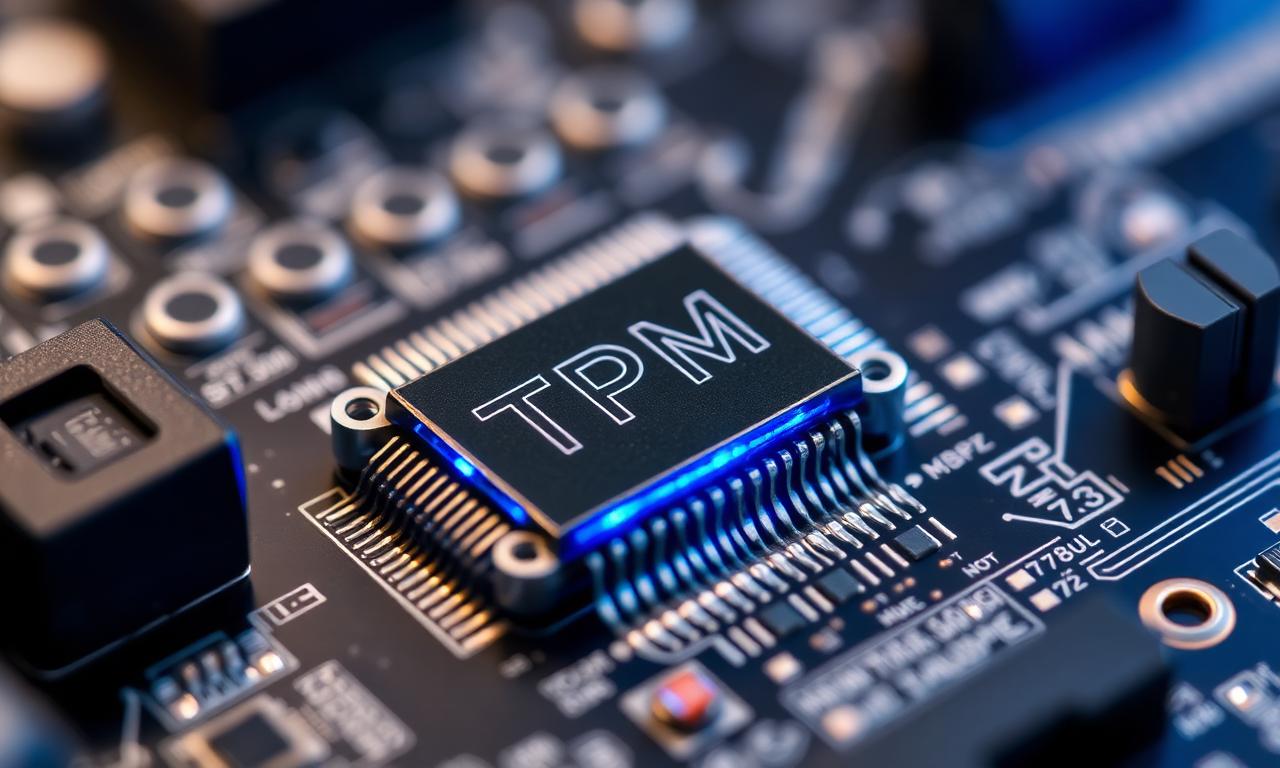
TPM (Trusted Platform Module) is a small cryptographic chip — on the motherboard, or built into modern AMD and Intel chipsets — whose job is to hold keys and produce signatures that never leave the chip. It was meant for things like BitLocker and corporate security; game anti-cheats now use it too.
Why TPM matters for hardware identity
A TPM holds an Endorsement Key — a unique key set at the factory that does not change for the life of the chip. Wipe the disk, reinstall Windows: the key is still the same. For an anti-cheat, that is an almost ideal anchor — an identity rooted in hardware.
Windows 11 made TPM 2.0 a requirement, so it is now standard even on budget machines. The direction is clear: device identity is moving toward something rooted in a chip rather than a value in software.
Can a TPM identity be changed?
Not by ordinary software, and HWIDChanger deliberately does not touch the TPM. The TPM is firmware-level, and interfering with it carelessly can make a device unbootable or lock you out of BitLocker-encrypted data. That is a risk a safe tool should not take.
What this means in practice
For most software DRM and many game anti-cheats, the TPM is one signal among many, and changing the identifiers that can be changed safely — Windows IDs, the disk volume serial, MAC addresses — is enough to look like a different machine. Against systems that lean specifically on the TPM, a software change has a real limit. Knowing that honestly is better than expecting a tool to rewrite a chip.